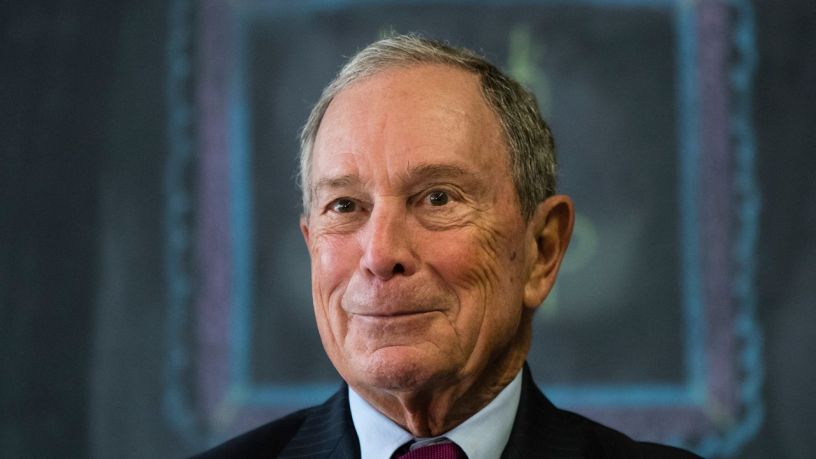
Mike Bloomberg sent out an email earlier today announcing a management shakeup.
He named Vlad Kliatchko CEO, JP Zammitt president and former Bank of England governor Mark Carney as chairman of the board. Patti Roskill will be the chief financial officer.
The changes follow a prescient article in the Financial Times by Robin Wigglesworth that predicted Mike would likely tap Vlad or JP for bigger roles as part of a succession plan.
Having spent three decades at Bloomberg (I left last year to start my own firm), I imagine my former colleagues are parsing the tea leaves of the announcement, which like any corporate statement is both exceedingly specific and maddeningly imprecise.
The titles are clear enough, of course. But what a CEO or a president does at a company founded and still basically run by Mike Bloomberg is not clear.
Mike said in the email: “I’m sure these changes raise questions about me, so let me put them to rest: I’m not going anywhere.”
He also announced that he will be replacing the entire board of directors, most of whom have served for more than 20 years. Carney will likely assemble a more highly-visible group.
The most enjoyable aspect of the memo for me was the small details — crumbs ignored by the outside world — which would resonate internally.
For example, Mike mentions Peter Grauer, who served for years as the Chairman of the Board of Directors. On second reference, he calls him “Pete.” I never heard anyone except Mike call him Pete. It sounds weird to employees, but it’s also sort of wonderful.
More significantly, Mike mentions that Tom Secunda will be moving to the fifth floor, which is where Mike sits. Tom previously sat with the rest of management on the sixth floor.
At Bloomberg, location is destiny. Employees know that where you sit is who you are.
I love that Mike mentions the specific floor, an arguably unnecessary detail.
But successful companies have cultures and cultures are built on details.
Mike sits on the fifth floor because his decision to return to the company after he was mayor was a sudden one. It was the only place facilities could accommodate a desk on short notice.
Mike famously insists on the same kind of open-floor seating plan that he had forty years ago at Salomon Brothers as a trader and as Mayor of New York. Less appreciated, is that he encourages senior managers to eschew corner offices and sit in the middle of the room.
Tom is less known outside the company, but huge inside. He is the chief architect of most of the major technological and product innovations. He’s one of four original co-founders. The FT compared his relationship to Mike to the one Steve Wozniak had with Steve Jobs at Apple.
Tom’s move suggests he’ll pull back from his current role in which he de facto oversees product and strategy.
The moving of desks as much as the revision of titles indicates real change at Bloomberg.
(Part of a series of lessons I learned from three decades working at Bloomberg LP)
 Ted Merz