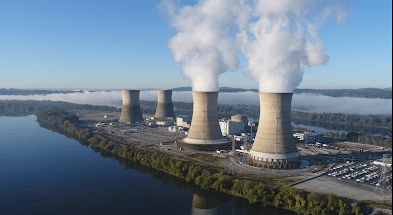
The Three Mile Island generator was for decades a symbol of the risk of nuclear energy.
Now, it may become a symbol of three powerful new trends: the insatiable need for power among tech companies, a remarkable shift in public opinion and a desire for carbon-free energy.
If you missed the news, Three Mile Island, infamous for a 1979 nuclear accident, will be re-opened by Constellation Energy. Constellation signed a 20-year agreement with Microsoft to power data centers, crucial for AI and cloud computing.
For me the news reverberated personally. My father worked as the head of systems operations at a company that owned a stake in Three Mile Island. I remember vividly the day the accident happened and talking about it at the dinner table.
The fallout was intense. It changed the political landscape and at home we found out Dad had invested a good chunk of our savings in the shares of his employer, GPU, Inc. in part because of his faith in nuclear power. The shares plunged.
Last week’s announcement prompted me to want to understand more about the landscape for power in general and nuclear in particular. Since the emergence of Generative AI two years ago, we’ve heard about the urgent need among tech companies for cheap, reliable power.
The Three Mile Island deal underscored that in a dramatic way.
I ran an analysis using SigTech’s MAGIC application, an AI powered system used by quants to analyze models.
MAGIC said AI-driven data centers will consume 200 terawatt-hours (TWh) of electricity annually by 2025. Keeping up with demand will require $20 billion in annual energy spending.
The huge increase is driven by advanced GPU usage. Training a large AI model like GPT-3 consumes about 1,300 megawatt-hours (MWh), a significant increase in energy usage.
There are about a dozen mothballed nuclear reactors in the U.S. Building a new nuclear plant typically takes 6 to 8 years, though delays can extend the timeline.
In addition to the Microsoft deal, these deals are underway:
–AWS acquiring a data center powered by the Susquehanna Steam Electric Station, a nuclear plant in Pennsylvania, for $650 million.
–Google exploring the use of nuclear power as part of its strategy to power data centers.
-Oracle planning a data center powered by small modular nuclear reactors.
SigTech’s analysis stressed the shift to nuclear was also driven by three new factors:
–The need for uninterrupted power for data centers.
–Public pressure to reduce carbon footprints.
–A shift in public support for nuclear power.
We’ve come a long way in 45 years.
According to Pew Research, more than half of Americans favor more nuclear plants, a shift since the accident, which was a combination of mechanical failures and human error.
While some radioactive gas was released, the health impact was minimal.
My father wasn’t at the plant when the accident occurred.
He told me that he later visited Three Mile Island to check it out.
It was probably a bad idea, but he wanted to see it for himself.
 Ted Merz