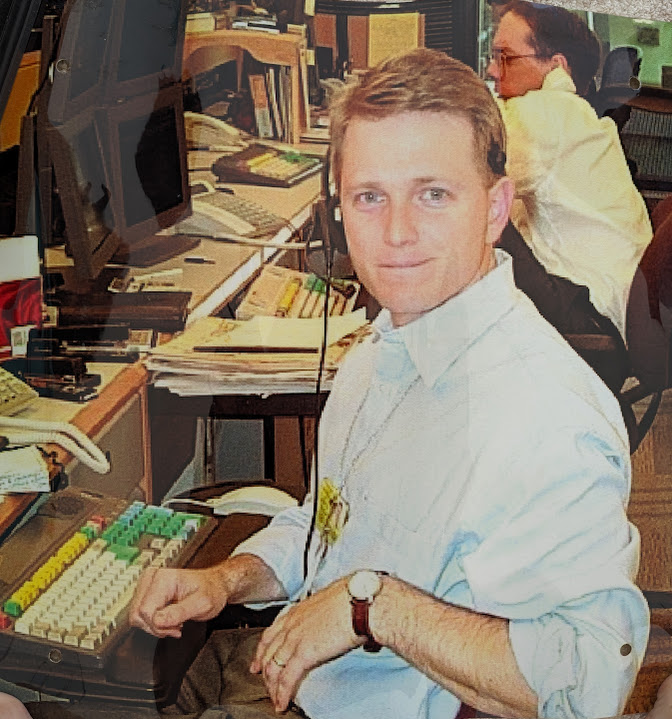
I spent the turn of the last century sitting in an office waiting for the end of the digital world.
It was New Year’s Eve and I was the New York Bureau Chief for Bloomberg News.
For those too young to remember, there was an expectation the world’s computers would fail at midnight.
The reason? Because most computer code only included two digits for the year i.e. 97 for 1997. The concern was when we hit 2000 everything would break down.
It was called the “Y2K problem” and it’s hard now to believe just how much anxiety it engendered at the time.
So much in fact that Bloomberg News felt that key offices had to be staffed to deal with the potential fallout.
Brian Rooney, the TOP News editor, had already decided to be there. Over the summer he had been asked to direct the news coverage of the event by then Editor-in-Chief Matt Winkler.
I didn’t think he should be alone, so I assigned myself to join him.
In part, I felt bad about ruining anyone else’s evening. Everyone was expecting to “party like it’s 1999.”
My bigger consideration was that it would look bad to pick someone else.
Bloomberg had a “lead from the front” culture, operating in Founders Mode, not Manager Mode.
You didn’t ask people to do something you wouldn’t do. If people were going to work late, you stayed. If they worked weekends, so did you. Team leaders sat in the middle of the room, eschewing window seats or corner offices.
I’m not saying everyone did that. And I’m not saying it was wise or necessary, but it was generally the expectation.
Looking back, it was an unnecessary gesture on our parts.
We were editors, not engineers.
It wasn’t clear what if anything we were going to do if systems failed.
And yet, it sent a cultural message – if only to our colleagues – that we were committed.
We sat there because someone had to sit there and we didn’t think it should be anyone else.
Bloomberg was no longer a startup in 1999 but in many ways it acted like one.
These days there is a brewing debate in corporate America about the role of managers.
Lots of tweets argue that there is mid-level management bloat and we should get rid of it, especially as AI automates processes.
Meta’s Mark Zuckerberg has said managers should be or act more like “individual contributors.”
Paul Graham argued in an influential blog that the longer companies stay in Founders Mode – best understood by an intense engagement from leaders — the better.
That sentiment is colliding with two decades of increasing demands for “work life balance.”
I missed out celebrating the only turn of the century I’ll ever see.
Should I have stayed home in 2000? Assigned someone else?
What would you have done then?
What would you do now?
 Ted Merz