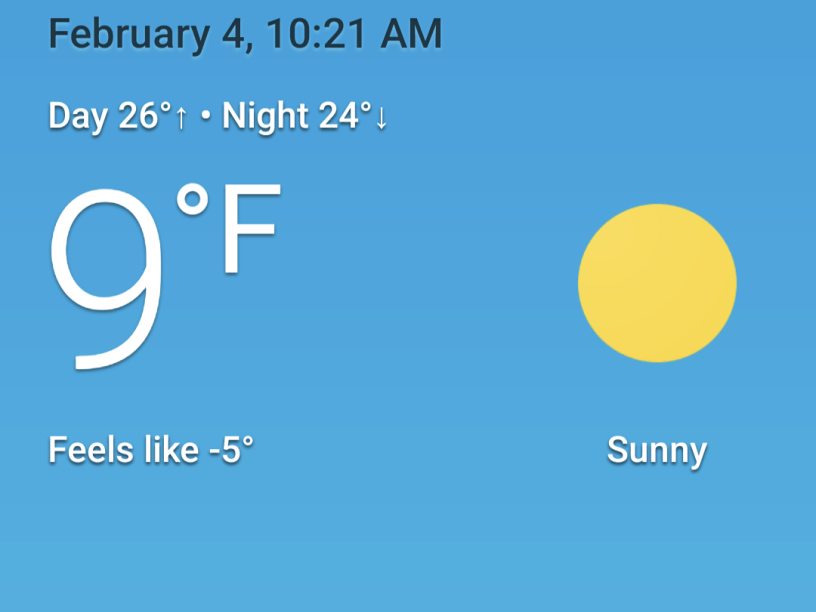
Digital publishers love the weather because it’s a big source of Web traffic.
That’s because people look up the weather every day. That search volume spikes when there is a polar vortex or some other extreme event involving rain, snow, sleet or hail.
One challenge for weather reporters is finding the anomalies. Most rely on the National Weather Service, which has a deep, but arcane web site.
At Pricing Culture, we leveraged AI to build a news feed to help a media client hone in on extreme fluctuations that would make compelling stories, such as:
–The hottest day in Denver in 100 years
–The last time it snowed in New Orleans
–The coldest day in Florida in fifty years
Here’s how it works: we tap into data from the National Weather Service and process it to detect anomalies and outliers, such as extreme events that would be newsworthy. We then leverage AI to generate a quick notification that we deliver in a feed.
We use our proprietary numbers-into-narrative technology to deliver a batch of “prompts” to the client. Each prompt contains many of the details a reporter would need to write the story, such as the last time it was that hot or cold and the population of the city.
The system helps make writers more efficient. Instead of casting about for ideas, they are delivered a slate of compelling stories grounded by data. They can then use news judgement and spend their time on how best to frame their articles.
We call these “qualified content leads” and they could be useful not just for traditional media reporters but anyone creating content from Wall Street analysts to academics doing research.
It’s a way to mine large data sets for interesting observations or patterns that help tell stories.
I compare the idea to “qualified leads” that sales reps get for prospects. It still requires the person to be selective and creative, but it increases the likelihood of success.
The big idea here is that this kind of qualified content is applicable to virtually any data set.
Applying AI to data sets – especially proprietary data — is like riding an electric bike. You still have to pedal and steer but it can help you get to your destination much faster.
 Ted Merz