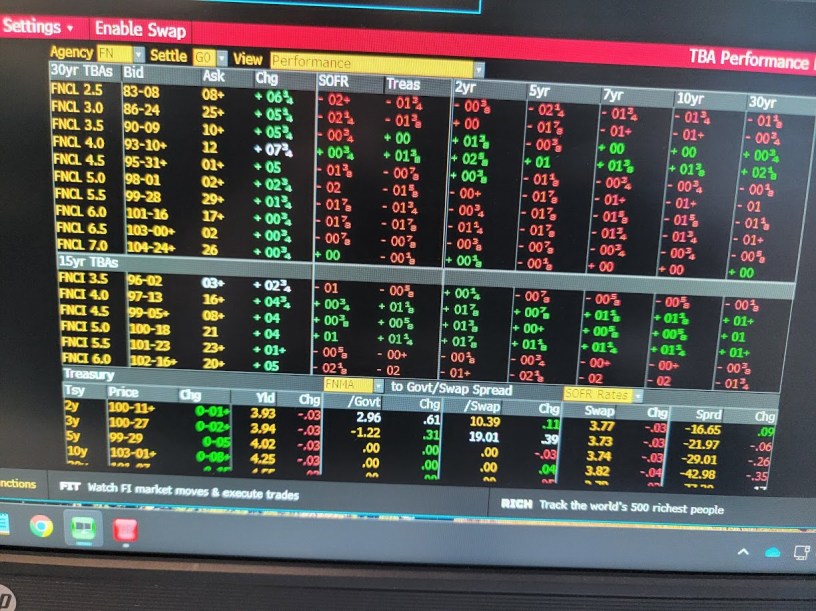
The Bloomberg terminal famously has 30,000 or so functions. Some of the best are little known either because they are gimmicky or internal.
My friend Matt Ober, a partner at Social Leverage and former BLP employee, posted about one recently: HALF <go>, an internal application for employees to split the cost of a sandwich. The feature has since been retired.
HALF was probably ahead of its time. I could imagine a venture firm in San Francisco might be interested in funding such an app. There are crazier ideas.
Matt’s LinkedIn post elicited a ton of comments as people shared other obscure and off-beat functions. Note, not all of these still exist. Highlights included:
FISH <GO> A livestream of the Bloomberg fish tank in the NY HQ.
FLY <GO> A precursor to Expedia, listing flights in and out of cities.
POSH <GO> User-generated high-end items like boats and watches for sale.
DINE <GO> A list of restaurants over a decade before Open Table
NOW <GO> The time where ever you are.
QUIZ <GO> A test of your knowledge about breaking news
My favorites were the internal codes created two decades ago by Bloomberg’s News department, where I previously worked. They were idiosyncratic tags applied to stories to call out journalism tropes.
Bloomberg’s news system relies on typing in a prefix “NI” which stands for “news industry” followed by a short mnemonic that correlates to the topic. Popular public codes included NI BON for bonds; NI STK for stocks.
The internal codes were crowd-sourced by random, anonymous editors and reporters as a way to discourage types of stories. The codes weren’t visible to clients or sanctioned by management. There was no oversight.
NI NSS <GO> was the best known. NSS stood for No Sh-t Sherlock. It was applied to stories that stated the blindingly obvious.
NI WINDOW <GO> Applied to stories that begin with a CEO or executive contemplating the future while looking out a high-floor window that offered a commanding view of the landscape.
NI WHEN <GO> Stories that begin with the journalistic cliché “When XYZ happened…”
NI MDM <GO> Stood for “must do more.” It was a somewhat unique-to-Bloomberg kind of story in which a CEO would be simultaneously praised for reaching a milestone while reminded they hadn’t done enough.
The most useful internal code kept track of people, not stories.
Since Bloomberg didn’t typically announce departures for any reason – whether because the person was fired or quit — you’d be unaware when colleagues left.
Editors came up with a clever solution to let people know that someone was gone: The final story a person wrote or edited was coded to a category NI LAST <GO>.
I’m not sure who came up with that genius category.
But I doubt they are there anymore.
 Ted Merz