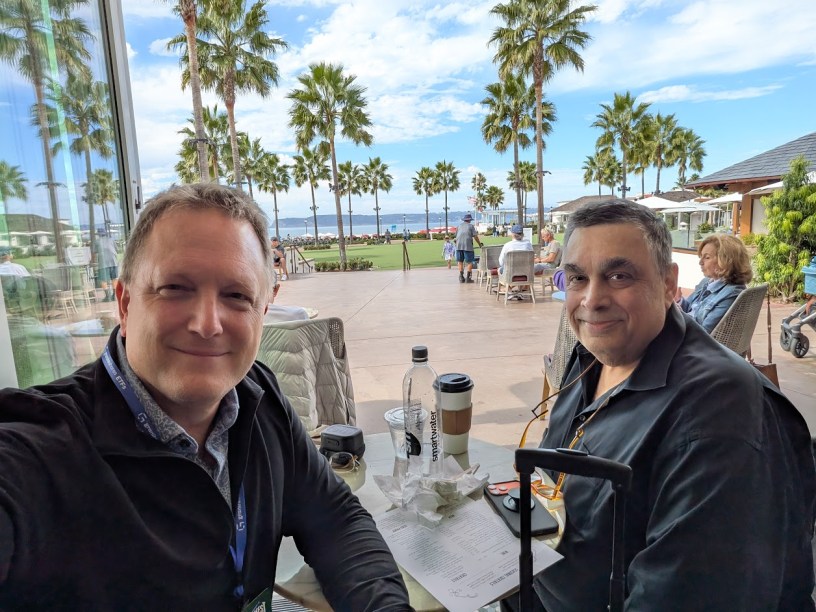
The View from the Office.
I caught up with Michael Parekh at the Del on Coronado Island in San Diego where we were both attending the annual Stocktoberfest conference organized by Howard Lindzon.
Michael started the internet research group at Goldman Sachs in the early 1990s and managed the team between 1994 and 2002, giving him a unique perspective of the origins and development of the modern internet through the dot com bubble.
These days, Michael does consulting and publishes daily one of the best newsletters about AI called Reset to Zero. He does a great job of summarizing the latest events and putting them into a broader historical context.
Michael joined Goldman in 1982 – the year Time Magazine put a computer on the cover as “person of the year.” He became a “self-trained geek” who said he was addicted to technology and wrote a research report in 1994 titled “Byways for Highway” that predicted the internet infrastructure buildout that took us from dial-up to standard networking.
Michael is a fountain of wisdom and perspective garnered over decades. He said he’s never been more excited about the future because of the potential of AI, but he’s also concerned about all the challenges the technology will bring.
He says that we are in a bubble with AI but explains why it may not end any time soon. In part, that’s due to the tremendous outlays for both infrastructure and energy to fuel computing.
Michael told me some fantastic stories, including how he said “no” to Steve Jobs – twice. He was part of the group at Goldman who rejected the Apple co-founder’s pitch to take public Next and later Pixar (Robertson Stephens ended up managing that sale).
He also turned down an offer to be the lead internet analyst at Merrill Lynch that later went to Henry Blodget and may have changed financial history.
As many will recall, a probe of Blodget by New York State Attorney General Eliott Spitzer was among the drivers for a major overhaul that separated research and banking and put in place disclosure requirements. Wall Street firms were fined $1.4 billion.
Accused of promoting stocks publicly that he privately disparaged, Blodget was banned for life from the securities industry in 2003. Four years later he went on to found Business Insider which he sold in 2015 for $343 million.
It’s a great story. One of many.
Check out Michael’s newsletter. Or connect with him via LinkedIn or DM me for a warm intro.
 Ted Merz